Step 1: Understand Space and Requirement
The first step of the interior designing process is to understand the space and the requirements of each room. There are a few questions you should have an answer for. Firstly, how many people stay in the house? What is the purpose of designing? What is the thought process behind it? These points are necessary to ponder over. Having a clear floor plan with a list of your requirements is important. Plan your home interiors with a clear vision and you can share your thoughts with an interior designer to help you further.
Step 2: Concept Development
Once the Design Programme Document is approved, the concept development phase begins. The initial ‘ideation’ stage involves brainstorming design solutions (verbal, sketched or written) before filtering out unworkable ideas and refining the workable ones until one or more main design concepts emerge. The main design concept is articulated in the form of a written Concept Statement expressing the principal ideas and approach behind the proposed design solution. The Concept Statement is accompanied by Schematic Drawings – quick sketches and graphic visualizations of these main ideas – portraying the siting, orientation, space allocations, circulation patterns, spatial and activity relationships from a variety of perspectives, colour schemes and other important details of the proposed design. Bubble diagrams are refined by the addition of proportion and character.
Step 3: Final Design Development and Documentation
Final Working Drawings (also called ‘Construction Drawings‘) are produced. These may include perspective drawings, site plans, floor plans, reflected ceiling plans (showing lighting and ceiling fixtures), sections, elevations and detailed drawing of architectural elements (e.g. doors and windows) and design elements (e.g. paint, trim, wall coverings and window treatments), along with all drawing notes necessary for the construction and installation of the design. Written Specifications list and describe in detail all furnishings and materials to be acquired, and Schedules list the type, finishes and placement of architectural and design elements. A critical path timeframe maps the duration of each activity in consecutive, overlapping order. The final design documentation, including drawings, specifications, schedules and timeframe become part of the designer’s contract with client.
Step 4: Plan Electrical and Plumbing Points
The next step would be to plan all the electrical points and light fittings. It’ll include getting the plumbing and pipeline work done too. Electrical points need to be decided before you start getting the rooms painted or wall paper work done. Lighting plays a significant role while designing the home interiors.
Step 5: Planning for False Ceiling Designs
False ceiling is usually made one foot below the real ceiling. The electrical ducts and points are set through this false ceiling. It has become a vital part of modern home interior designing. Apart from hiding the basic infrastructure like plumbing pipes and electrical wires, it adds to the design of the room.
Step 6: Flooring Designs and Material
Selecting the right flooring can be a little time-consuming task. Gather some information about the types of flooring as you plan the interiors. You can pick hardwood, laminates, tiles or vinyl. The choice depends on the cost, area and the pros and cons of each option available. For example: while deciding on the bathroom flooring, you should check if the material used will make the bathroom floor slippery or not.
Step 7: Woodwork and Furniture
If you are getting your furniture designed, you must possess some knowledge about the woodwork and types of materials. Think about the purpose of the furniture and space before you buy it. Utility and beauty, both go hand in hand. If you have a small living space, get furniture with enough storage space.
Step 8: Choosing Colors for Walls
Choosing a colour for your walls is the most interesting part of the process. Select colours which will go with the lighting and the furniture. Learn about the different paint finishes if you want to give the walls a textured finish.
Step 9: Choose Home Accessories and Home Furnishings
For each room, you can select different kinds of accessories. Using colourful accessories in your living room and bedroom can accentuate the design of the space. The use of different textures will bring in fun and joy. For your bathroom, select the faucets, and other plumbing fixtures well in advance.
Step 10: Installation
After you have your interior plan ready, the real work begins. After that, the installation process follows. In this part of the process, all the elements and appliances decided upon are installed and worked upon.
Step 11: Check on the Finishing
Finally, it comes down to the finishing of the design. You must keep an eye on the finishing of the work done. Check on the polish of the woodwork, the finish of the paint and the furniture, the strength of the cabinet handles and the corner finishing of each room.
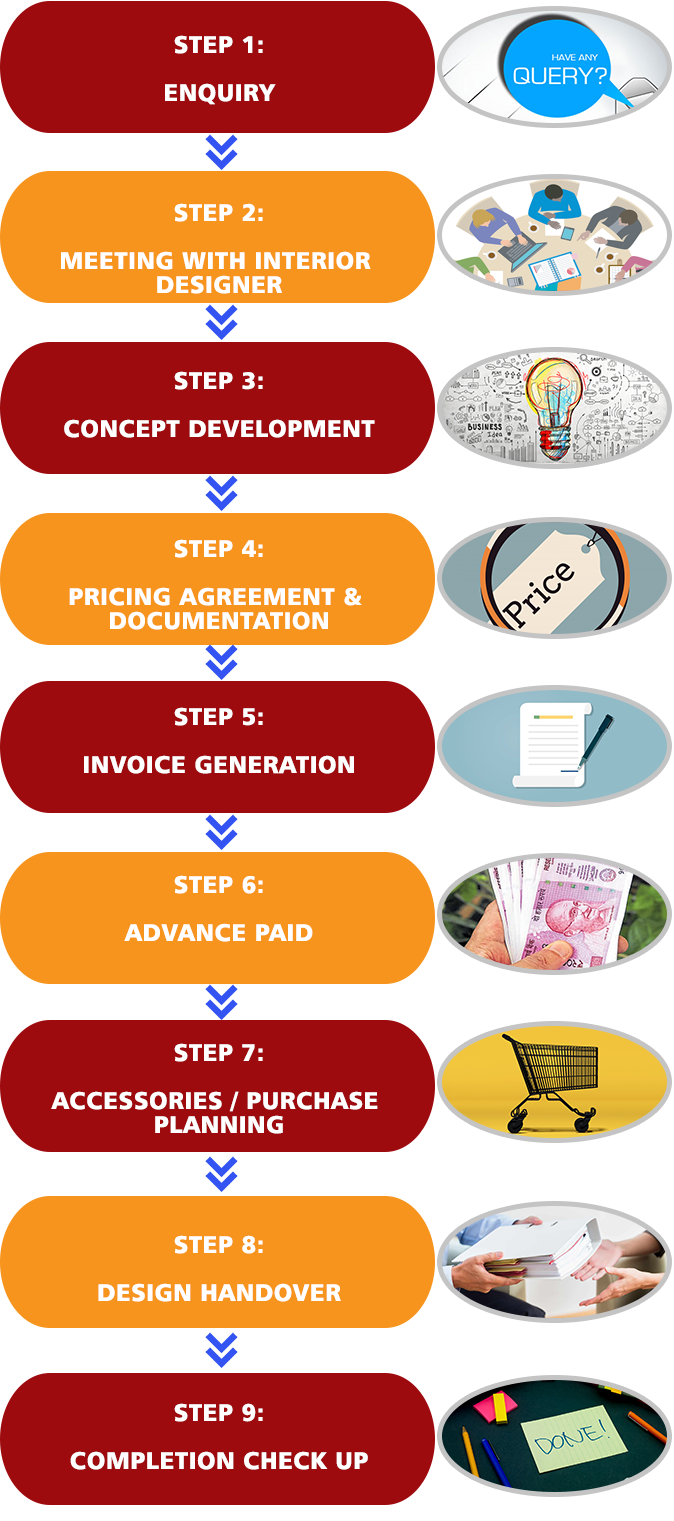
The main phases in the design process are: